Forensic Trauma Recovery Systems
Official home and publisher of
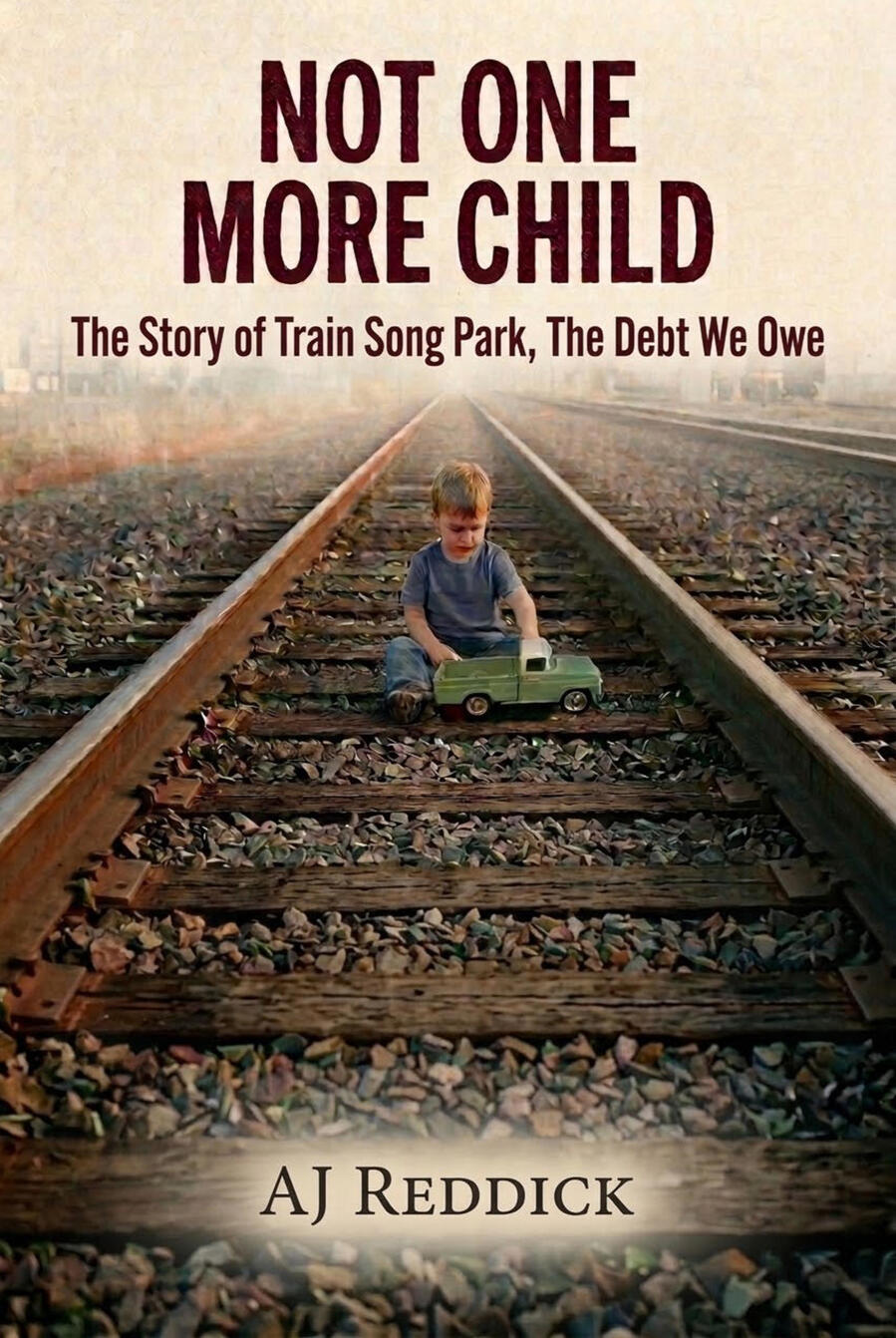
Not One More Child: The Story of Train Song Park
A Letter from the Author
Many times people have said I grew up on the wrong side of the railroad tracks, but in my case, that was literally true. I grew up in the Bethel Triangle, a place completely cut off, surrounded by steel rails and heavy industry.
Day and night, we lived with the "Train Song." It was an ethereal, spooky, kind of ringing sound echoing from the rail yards—the sound of the retarder brakes shrieking like something in a haunted house as they forced massive train cars to slow down, trying to keep them from smashing into each other too hard as they built trains destined for somewhere else.
But for a child surviving childhood sexual abuse (CSA), that train song wasn't just outside the window. It became an internal soundtrack. The screech of those brakes matched the inner screams of childhood trauma, the inner screams of addiction, and the constant, ringing tinnitus of a child stuck in absolute hypervigilance and terror.
For the entirety of my life, I have carried that train song inside me—the smashing of those trains, the chugging of the engines, the horns cutting through the intersections, and the inner demons that followed. This book is about what happens when you finally stop suffocating those inner screams. It is about breaking the silence, paying the debt we owe to our children, and finding a way out of the trauma and down a path of redemption and healing.
Releasing soon
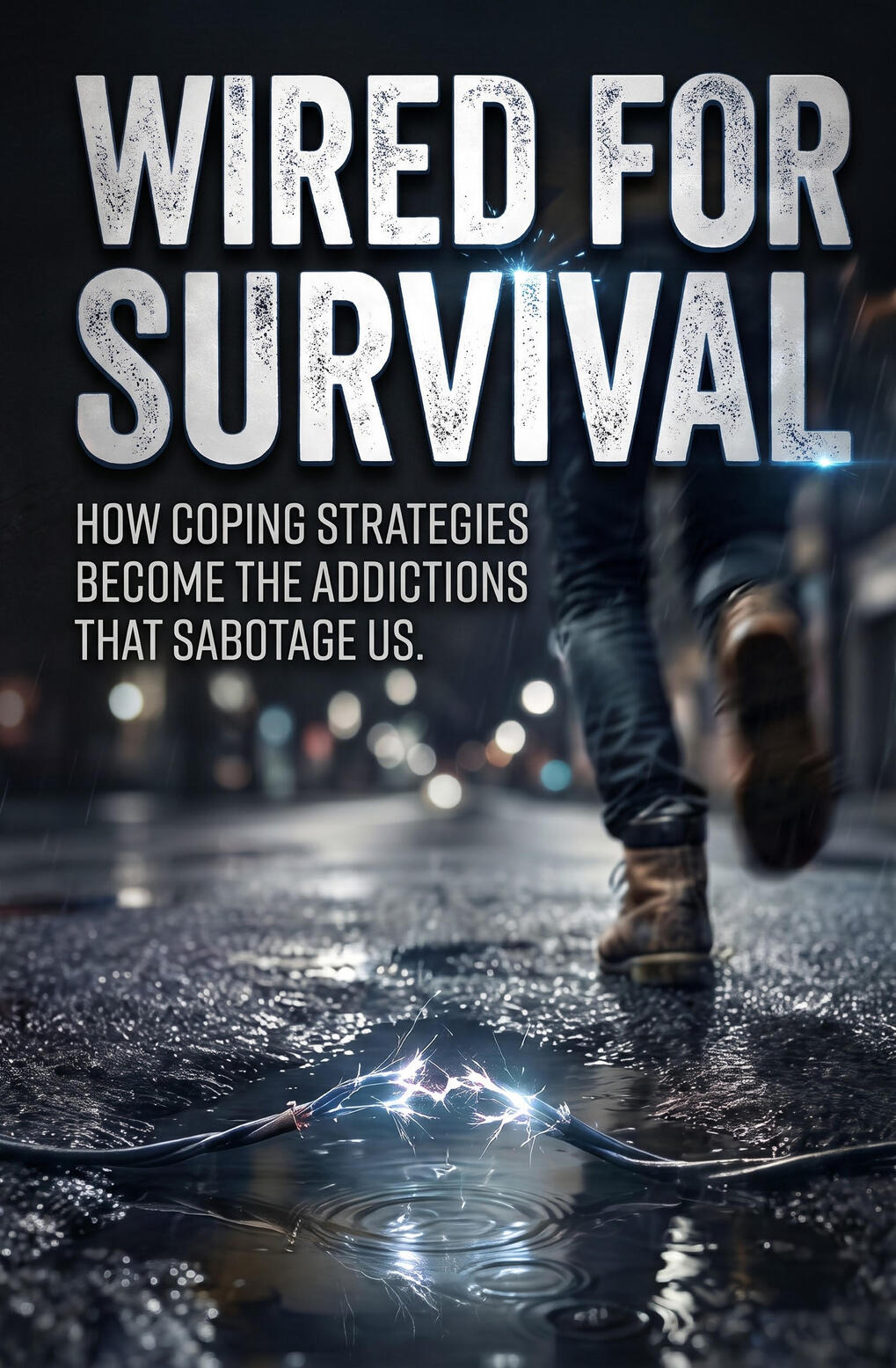
WIRED FOR SURVIVAL
When the Armor That Saved Your Life Becomes the Prison You Can't Escape
You are not broken. You are not crazy. And you are not a moral failure.
Look at the guy who turns every conversation into a stand-up routine, sweating through his shirt if there’s two seconds of silence. Look at the woman scrubbing baseboards with bleach at 1:00 AM until her knuckles bleed. Look at the addict pounding thirty straight shots, the runner disappearing into the high desert on his birthday, the cutter looking for proof of life, or the high-functioning professional who runs an entire company by day and blows up their marriage by night.
Society looks at these behaviors and calls them character defects, lack of discipline, or chemical glitches that need to be medicated into silence.
They are dead wrong.
What the world condemns as self-destruction was actually a stroke of biological survival genius.
When you were a child trapped in a war zone—facing physical violation, sexual abuse, terrifying neglect, or unpredictable rage—your young brain pulled off a miracle to keep your heart beating until morning. It froze your development at the point of impact. It built high-speed bypasses around your thinking mind. It taught your body to go numb, get big, get tough, get loud, or run wild.
Those survival mechanisms dragged you across the finish line into adulthood. They saved your sanity.
The tragedy is that what saved your life at eight years old is ruining your life at forty.
The war ended decades ago, but nobody ever passed the message down to the basement of your nervous system. The very walls you built to keep predators out have become the suffocating prison locking you in.
Written not from an ivory tower, but from sixty years in the trenches of survival, craftsmanship, and addiction recovery, Wired for Survival is the field manual you were never given. Stripping away high-dollar clinical jargon, it translates the heavy science of Bessel van der Kolk, Bruce Perry, Stephen Porges, and Richard Schwartz into the plain language

FORENSIC TRAUMA RECOVERY SYSTEMS
Bridging Somatic Regulation & Clinical RecoveryOur Mission
Forensic Trauma Recovery Systems (FTRS) develops structured,
non-verbal recovery frameworks for adult survivors of chronic and developmental trauma. By combining rhythm-based nervous system regulation with practical trauma education, FTRS provides a steady
physical foundation where true healing can take hold.Why the Body Comes First
Talk therapy often hits a wall when trauma locks the
nervous system into chronic fight, flight, or shutdown.
Before survivors can process painful memories in conversation,
their physical body must first register safety.* Rhythm Over Retraumatization:
Using steady, bilateral 60 BPM acoustic percussion
to calm hyperactive stress responses without forcing
survivors to talk through painful memories.* Low-Frequency Grounding:
Calming the nervous system through sub-bass acoustic
resonance that can be physically felt throughout
the chest and body.* Standardized 8-Module Protocol:
Practical psychoeducation translating complex brain science
into clear, actionable recovery tools.* Clinical Hardware Baseline:
Built exclusively around the Remo Buffalo Drum
(Comfort Sound Technology) with soft-density mallets
to ensure gentle, non-triggering, hospital-grade application.FTRS is a standardized physiological stabilization protocol
designed to support licensed clinicians, treatment centers,
and community recovery programs.